

The implementation of a ‘Trace and Claim’ system to monitor methane leaks across the value chain could reduce vast amounts of emissions.
European regulations require countries to improve transparency on methane leaks in the countries from which they import hydrocarbons.
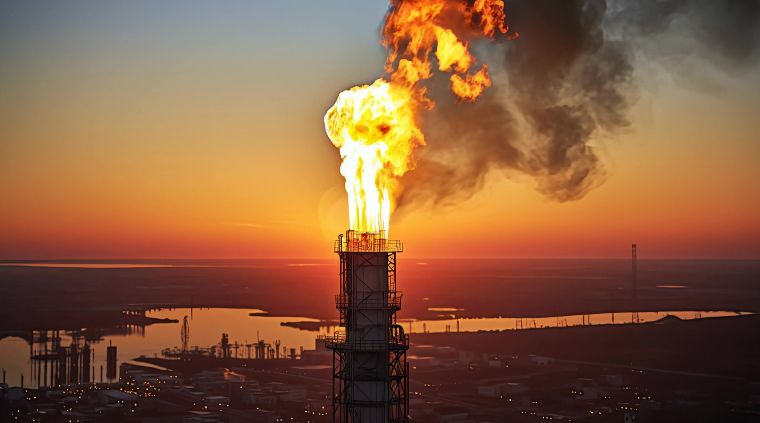
Madrid, 6 May 2026.- Methane leaks from the energy sector have continued to grow over the past year, even though methane has a global warming potential up to 80 times greater than CO2. Despite having no oil or gas fields of its own, Spain bears indirect responsibility for this. This is shown by the latest analysis report published by Fundación Renovables and Clean Air Task Force (CATF), which finds that, over the last year, the country has tripled methane leaks associated with the Oil & Gas value chain. In other words, the leaks that occur at the fields where the resource that Spain later imports is extracted.
The report details very significant increases in the three main countries on which Spain depends. In Algeria, which accounted for 35% of total liquefied natural gas (LNG) imports in 2025, methane leaks rose by 240%. The United States, the second-largest supplier, increased detected leaks by 111%, while Russia, whose share is steadily declining, doubled the number of recorded leaks compared with the previous year.
These figures also come in a context in which global methane emissions have risen again. So much so that data from the International Energy Agency (IEA) show that, over the past year, methane leaks from the energy sector released the equivalent of 100 billion cubic metres of gas. This amount is practically equivalent to releasing into the atmosphere all the gas that passed annually through the Strait of Hormuz before the war.
The European Union Methane Regulation (EUMR) establishes that, from 1 January 2027, all imports of oil and natural gas into the EU must certify Measurement, Reporting and Verification (MRV) systems. In this regard, Spain, one of Europe’s main gateways for hydrocarbons, has a key role to play in starting to apply the regulation as soon as possible and reducing methane leaks with a high climate impact. In other words, European countries are obliged to ensure that the countries and companies from which they import gas and oil officially monitor leaks and put measures in place to prevent them.
Spain must not only guarantee that its supply is secure in terms of volume, but also that it is sound from a climate perspective. This starts with applying European regulations and improving transparency in information related to methane leaks from the main hydrocarbon suppliers. In other words, Spain must ensure that the fuel reaching the peninsula has been extracted, refined and transported with guarantees and without methane leaks.
Fundación Renovables and CATF call on Spain —and the rest of the EU countries— to implement the ‘Trace and Claim’ mechanism, which has shown great potential for reducing methane leaks across the value chain. This tool requires proof that the assets that produce gas, that is, the companies and countries from which the resource is purchased, have implemented measurement, reporting and verification systems throughout the entire process, including transport to the destination country. This model could reduce up to 250,000 metric tonnes of methane per year in the Appalachian, Permian and Haynesville basins alone, which supply 85% of the gas from the Gulf Coast, the main origin of the LNG that reaches Europe.