Our purpose

We are a research and innovation centre working to accelerate the energy transition, democratise energy and move towards a 100% renewable and electrified future.

In 2010, a group of energy experts understood that the energy model had to change and leave the burning of fossil fuels behind forever. Since then, we have worked tirelessly, developing solutions to ensure that the energy transition moves forward quickly and fairly. We produce reports and analytical studies, work on legislative proposals, develop tools and create outreach and awareness-raising content. We are pioneers in the democratisation of energy and believe that the energy transition must reach every household and every sector.

How? By electrifying everything. From industry to transport through electric vehicles. To achieve this, we have a team of specialists working hard to ensure that renewable-energy-based solutions reach your city council, your company or your neighbourhood community. We also do this with the support of companies, organisations and citizens who believe in a renewable, fair and accessible energy model. You too can make it possible.

Why? Because our lives and those of future generations depend on it. We need to drive the energy transition because it will benefit citizens economically, yes, but also in terms of health. Renewables are the best tool for mitigating climate change. Driving them forward faster and more fairly will mean a better life.

Mission

The Foundation’s mission, inspired by the pursuit of sustainability in its broadest sense, is framed by all the activities it carries out in relation to achieving the following objectives:

To help accelerate the shift towards a sustainable energy model through the development of renewable energy and the rationalisation of energy consumption and use.

To cooperate in reducing emissions in activities related to the extraction, production, transformation, distribution, transport and use of energy.

To contribute to generating added value from the deployment of renewable energy for society as a whole, including the creation of industrial fabric and employment and the promotion of R&D&I.

To promote initiatives and support policies that help overcome the barriers currently hindering the development of renewable energy.

To develop activities and initiatives to disseminate, in particular, the characteristics and benefits of renewable energy and, more generally, those of a rational, sustainable and decarbonised energy model.

To introduce knowledge, at all levels, into the educational and cultural sphere regarding the advantages of using renewable energy compared with other energy models and sources.

Values

  1. Energy is a basic good and access to it must be a universal right, as it has a direct impact on social development, wellbeing, the environment, climate and biodiversity.
  2. We call for a new energy culture that is not based on extractivism or classic productivist and market-driven standards, but is inclusive, distributed and ethical, enabling the full development of all humanity, now and in the
    future.
  3. Redistributive justice, open governance, transparency, commitment to common value and public initiatives must be the basic pillars of our society. We need to recover, create and promote indicators for managing change that truly reflect an increase in wellbeing, not merely economic growth.
  4. Cultural change means placing the active consumer at the centre of the energy system, promoting truthful information, clear communication, transparent control processes, quality education and training aligned with the transformation of the model and the opportunities it creates.
  5. We promote adapting working conditions to technological and environmental reality, including shorter working weeks and teleworking, to reduce GHG emissions and improve work-life balance.
  1. The survival of all forms of life on Earth requires respect for its biophysical limits, many of which have already been exceeded or are at risk of being exceeded, such as climate change, ocean acidification, the hole in the ozone layer, nitrogen and phosphorus concentrations, water use, deforestation and land-use change, biodiversity loss, aerosols and particles in the atmosphere, radiation and microplastics.
  2. The climate emergency is caused by high dependence on fossil fuels and by an irrational and irresponsible consumption model, driven by the need for permanent economic growth. The priority of energy policy must be to reduce demand and ensure that the energy required is covered 100% by renewables.
  3. The need to adapt and protect the most vulnerable must be one of the fundamental lines of action so that the consequences of climate deterioration do not fall most heavily on the most disadvantaged.
  1. A new energy model based on saving, efficiency and renewable energy must be created, together with consumer participation in all energy markets and mandatory criteria of responsibility, sustainability, sufficiency, inclusion and territorial integration.
  2. Our goal is to democratise energy through electrification. Renewables are distributed sources and, therefore, everyone must have the option of using them.
  3. We are committed to ending dependence on fossil fuels, ensuring security of supply and achieving price stability through the promotion of renewables and a coherent management model for supply, demand, storage and the planning of the necessary infrastructure.
  4. We defend the development of energy markets that guarantee universal access and 100% renewable coverage, where there is correspondence between incurred costs and the price paid, where users pay according to use and each technology in the mix is remunerated fairly according to its contribution. The need to move towards a renewable model and to achieve the technological development milestones required to meet planned decarbonisation and renewable penetration targets must always be kept in mind.
  1. The virtuous circle of energy, as a model for society today and in the future, must be based on sustainable mobility, energy refurbishment, self-consumption and energy communities.
  2. We defend inclusive, non-gentrified urban development, recovering public space and the human dimension of the city. Access to nearby services, pedestrianisation, cycling and public transport are the basis for strengthening our model of social relations.
  3. Mobility and transport needs must be met by promoting local production, public transport and rail, powered by electricity.
  4. Energy-inefficient housing is the main cause of the rise in energy poverty. The right to decent housing is essential in order to eradicate it. Refurbishment must be a fundamental part of our commitment to citizens.
  5. Recovering and redistributing the benefits of the change in model across the territory is a consequence of revitalising rural areas, abandoning extractive and intensive proposals and deploying renewables in sectors linked to these areas. Renewable sources must contribute to territorial balance and local development in order to correct the imbalances historically created between generation and consumption by the centralised energy model.

Principles

Energy is a basic, universal, limited and costly good, with a direct impact on quality of life, the environment and the survival of the planet. Access to energy determines the future of countries and their relations of economic and technological competition.

The interest of a rational society is to consume the minimum amount of energy possible in order to achieve the greatest satisfaction of its basic needs, and energy always entails an economic cost and generates environmental impact.

The energy model based on the massive use of fossil fuels and nuclear energy is causing irreparable damage to the environment; it is unsustainable, involves unavoidable risks and catastrophes, and entails the progressive increase in the cost of conventional technologies.

The crises facing the world economy in the coming decades will be related to energy supply and to the economic and social impacts of climate change. Anticipating these future crises must be a priority for any government.

An economy less dependent on fossil fuels, with no CO2 emissions, with more efficient energy use and more renewables is the way to accelerate progress towards a new sustainable energy model.

Renewable sources must be understood within a framework of long-term energy strategy in which intergenerational solidarity prevents us from passing on problems of security of supply, environmental pollution, radioactive waste and nuclear risks to future generations.

Renewable energy is the most effective technology for reducing energy dependence and CO2 emissions and improving energy intensity. All improvements observed in recent years in these three ratios have been due to the growth of the share of renewables in the energy system.

Renewable energy has a positive socioeconomic impact both on national income, by reducing gas and oil imports and through its growing contribution to GDP, and on the disposable income of all consumers; it generates economic activity and employment; and it contributes to the development of domestic industry and technology, whose maturity is advancing rapidly.

In a scenario in which the costs of all energy sources are internalised, renewables are already fully competitive today. Energy savings and the development of renewables will lead to greater technological innovation in the productive structure of the economy and in all sectors of activity, reducing energy costs and becoming a competitiveness factor.

This new energy-planning model must combine supply based on renewable energy with the incorporation of rational-use criteria for flexible demand. Proactive demand management must be the main axis for incorporating renewable energy.
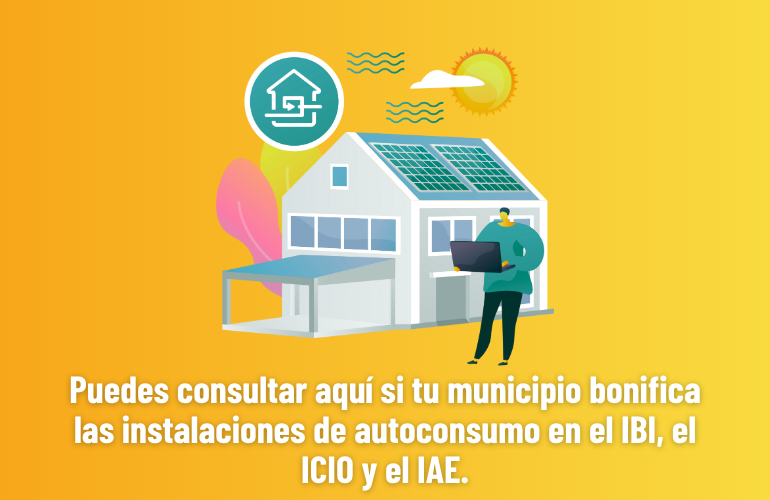

Renewables are the main instrument for changing the pattern of our economy, and their integration into urban planning, buildings and transport makes them a regular, everyday element of daily activity. A new energy culture will emerge in this urban scenario, in which all renewable technologies are necessary and complementary to achieve the objectives of nearly zero-energy buildings, optimum levels of profitability with energy efficiency, zero emissions, urban heating and cooling systems and the supply of energy for all transport from renewables.

Renewables are the only energy source which, because they are indigenous, inexhaustible and available in nature at zero cost, can guarantee supply to all citizens of the world who currently have no access to energy and to all those who in the future will be unable to bear the incalculable costs of dependence on fossil fuels. In this scenario, a new citizens’ right must be guaranteed: the right of access to renewable energy sources.

Únete a la Fundación renovables
¡La Fundación te necesita!
Tenemos que hacer valer nuestra voz y ampliar este movimiento ciudadano por el cambio de modelo energético.
Las amigas y los amigos de la Fundación Renovables, su mayor activo.