

Royal Decree-Law 7/2026 will minimise the economic impact of the energy crisis on households.
This is an important reform that will help advance the energy transition and strengthen sovereignty and independence.
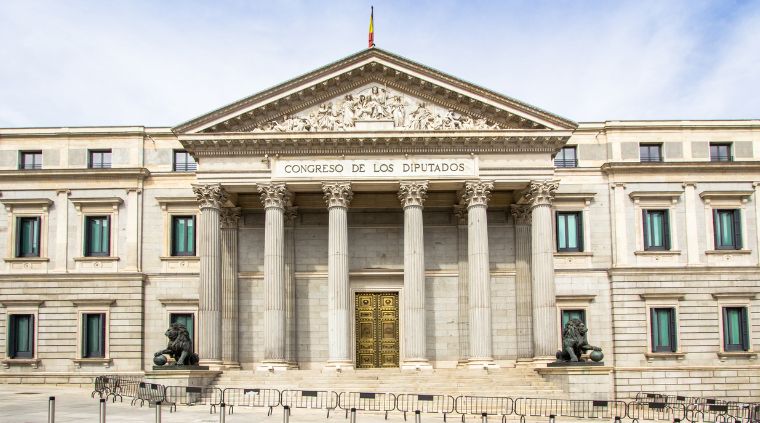
Madrid, 26 March 2026.- Fundación Renovables welcomes the fact that Spain’s Congress of Deputies has set aside political tactics to ratify Royal Decree-Law 7/2026 in response to the energy crisis in the Middle East. This energy reform has been approved with the support of PSOE, Sumar, ERC, EH Bildu, PNV and Junts, and with the abstention of PP and Podemos.
This package of reforms includes important measures to protect vulnerable households, curb inflation and strengthen energy sovereignty through electrification. Nevertheless, we regret that, once again, a crisis has had to arise in order to drive reforms which, regardless of the context, are necessary to achieve a fair and democratic energy transition.
In any case, this is good news for Spanish society. The ratification of this Royal Decree-Law will extend coverage of the social tariff, with discounts of up to 42.5% for vulnerable consumers and 57.1% for those experiencing severe poverty.
The reform also sends a positive signal in favour of electrification by reducing the Special Tax on Electricity (IEE) from 5.1% to 0.5%, something Fundación Renovables has been calling for for years. Other tax measures will also be introduced to speed up electrification. Examples include personal income tax deductions for the purchase of electric vehicles or for energy renovation work in homes, as well as linking heat pumps to CAE credits. It is therefore positive that direct tax changes are being introduced to encourage electrification.
As regards the reduction in the hydrocarbon tax, this is a very negative and counterproductive decision, as it will encourage the consumption of fossil fuels. The VAT reduction on fuel has been wrongly designed, since it should only apply to vulnerable households and strategic sectors. The same applies to the Tax on the Value of Electricity Production, which should only have been reduced for renewable technologies.
Accelerating the Energy Transition
In another area, the reform points in the right direction, as it seeks to increase the deployment of renewables through the approval of Renewable Acceleration Areas (ZAR). This mapping tool will make it possible to define suitable areas for new photovoltaic and wind farms where there are no social or environmental impacts.
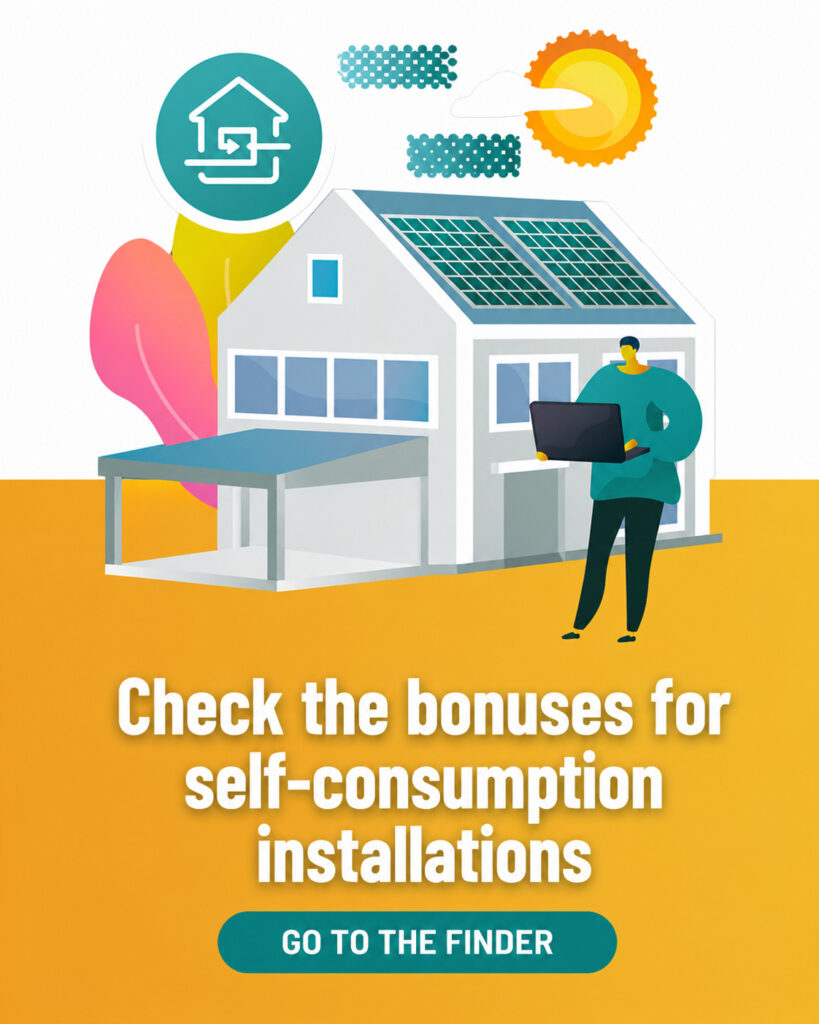
It is also important to highlight the support given to self-consumption through this reform, as the radius for sharing energy is extended to 5 km and 10% of grid nodes are reserved for self-consumption connections. In addition, the legal status of energy communities is strengthened by allowing local councils to take part in them, and a commitment is made to approve, within three months, the Royal Decree on Energy Communities.
The support this package provides for photovoltaic self-consumption should also be noted: the extension to 5 km of the radius for sharing energy, the reservation of 10% of grid nodes for self-consumption connections and the amendment of the Local Government Framework Law to facilitate the participation of municipalities in Energy Communities. A commitment is also made to approve the Royal Decree on Energy Communities within three months.
We hope that the approved measures will help electrify demand and set a precedent for political parties to reach further agreements that allow us to move forward in our energy transition.