




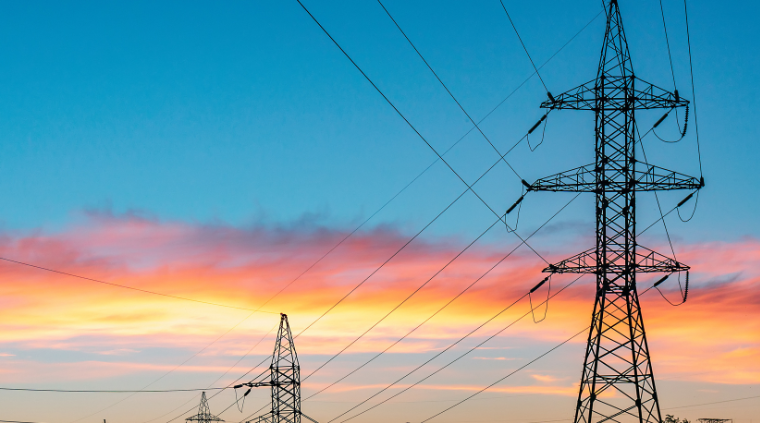
The European Grids Package aims to increase electricity exchanges between European countries by 50%, reducing administrative procedures to speed up installation.
Brussels’ guidelines include plans to build hydrogen pipelines that could end up being used to transport gas, as there is no forecast H2 demand to justify the investment.
Madrid, 10 December 2025.- The European Union (EU) has approved the European Grids Package, the largest grid reform to date aimed at accelerating the energy transition under Fit for 55. Fundación Renovables welcomes its approval, as the package strengthens the electrification of the economy and makes it possible to accelerate the modernisation and expansion of our grid system. With this set of measures, the EU aims to raise the electrification rate of final consumption from 23% to 32% by 2030.
The Grids Package will also improve connections between EU member states through the planning of new transmission infrastructure, while also maximising the use of existing infrastructure to transport electricity across borders and increase electricity demand nationally. It also seeks to support innovative technologies and regulations that increase the available capacity of existing transmission lines by between 20% and 40%. The reform aims to increase cross-border electricity trade by 50%, raise European GDP by around 18 billion euros by 2030 and reduce external energy dependence.
The European Commission (EC) also wants to shorten timelines and streamline authorisation processes, as more than a quarter of European grid projects considered PCI (projects of common interest) are delayed by between four and ten years. Authorisation procedures are therefore intended to be limited to a maximum of two years, extendable to three in the most complex cases.
At this point, Fundación Renovables welcomes the EC’s inclusion of improvements to public participation processes during the approval of new infrastructure, highlighting the need for a favourable social licence to avoid local opposition. The deployment of new grids must be accelerated, but citizens must also be included in decision-making to reduce any impact that may be hidden from developers and administrations.
In another area, it is inexplicable that Europe has once again decided to include measures that support fossil gas in a reform supposedly designed to promote the energy transition by eliminating fossil fuels. The approved package includes measures to facilitate the construction of new gas pipelines, which runs counter to climate goals and to the need to reduce energy dependence on third countries such as Russia and the United States.
Likewise, the decision to review the gas and hydrogen package directives, the renewable energy directive and the internal electricity market directive could pose a high risk to the energy transition, depending on whether permit acceleration is promoted through the removal of administrative barriers or through outright deregulation and the loss of public participation. It is essential to monitor this new review to ensure that it does not undermine the principles of a fair, orderly and sustainable energy transition.
Among the guidelines approved by Brussels is direct support for green hydrogen transmission networks, with the construction of a corridor connecting Western Europe with the Baltic region. This decision, like all international hydrogen transport, makes little sense, as it deepens the inconsistency of European hydrogen policies by backing transport despite the technical difficulties involved, the increased costs and the loss of efficiency caused by producing hydrogen far from consumption areas. Fundación Renovables argues that green hydrogen must be produced alongside the industries that consume it and rejects any measure aimed at building large hydrogen pipelines that may ultimately be used to transport more fossil gas or renewable gases.
We welcome the fact that the reform does include specific measures to adapt grids to strategic technologies for the energy transition, such as storage, speeding up its deployment at critical nodes to provide flexibility to the system.
Another issue that has not been included, and which is of vital importance, is grid governance: the type of ownership of assets that are essential for the energy transition. This highlights the need, in certain cases where inability or immobility is proven, for them to become fully public.
“We need to invest in modernising our electricity grids and adapting them to the speed of the energy transition. Right now, it is much faster to install renewables than to transport their electricity to new consumers. Demand is therefore not electrifying at the same pace, and this is a serious risk in all countries, especially Spain,” says Ismael Morales, Head of Climate Policy at Fundación Renovables. “Europe must see this policy as an opportunity to accelerate the deployment of renewables and move towards the full electrification of the economy, keeping hydrogen generation close to where it is consumed, but also as a way to improve our energy sovereignty and independence and ensure that both households and companies reduce their energy bills.”